
Article: The Story Behind Our Estonian-Made Garments
The Story Behind Our Estonian-Made Garments
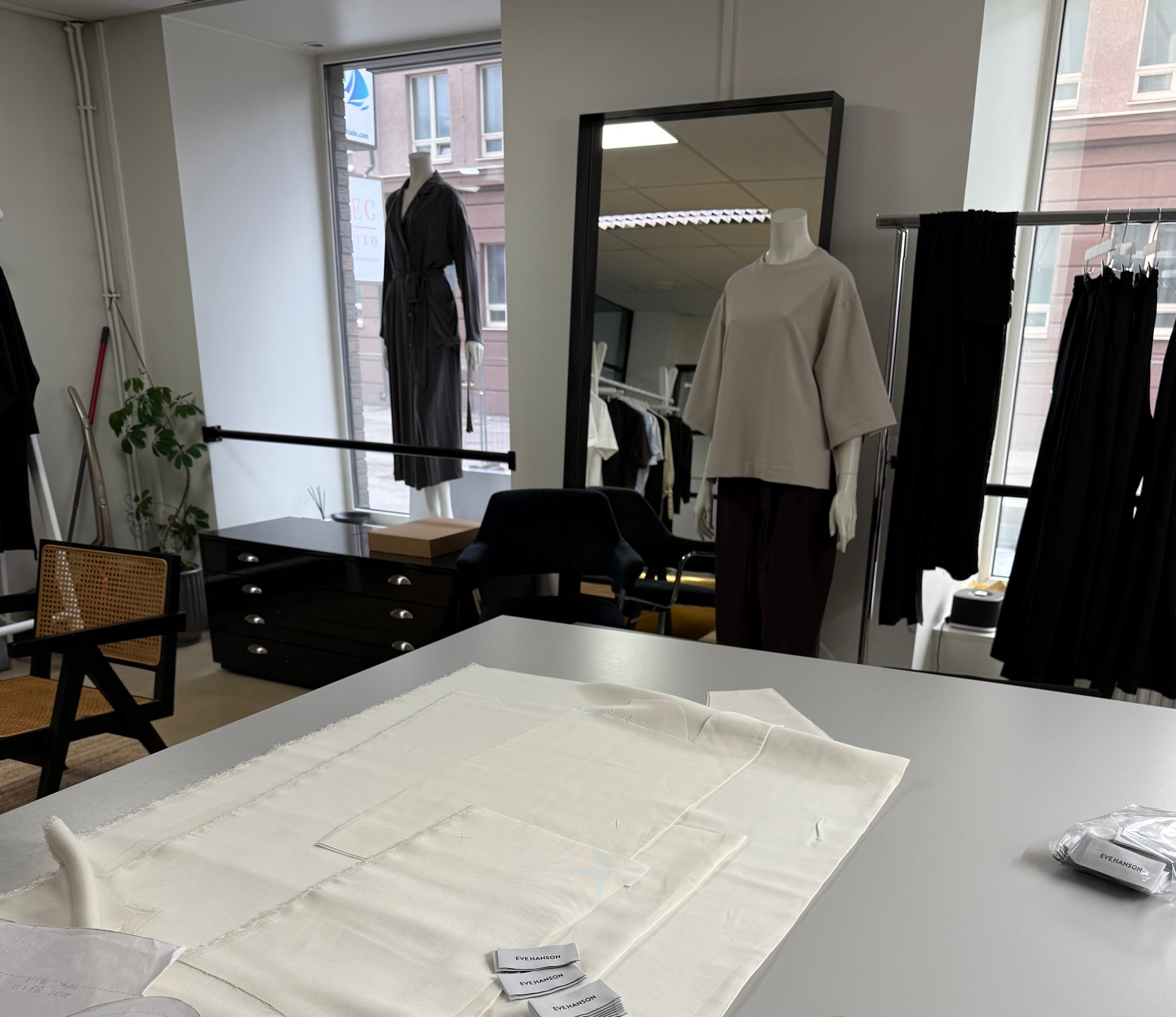
There's a moment, before a garment exists, when it's still just an idea and a length of fabric on a table.
At Eve Hanson, that moment happens in Estonia. The cutting, the sewing, the finishing — the work that turns fabric into something you'll wear for years — is done here, by hand, in small batches. We make some pieces in our own studio. Others are produced in small, trusted production runs, also in Estonia. Either way, the garment is ours from start to finish.
The fabrics travel further. We source them from across Europe — many from Italy, where textile traditions run deep, and quality standards are exacting. But the making is always local.
Why Made in Estonia Matters
Estonia is a small country with a serious design culture. The craft traditions here are quiet but precise — there's no room for shortcuts when production runs are small, and every piece is visible.
When a garment is made locally, accountability is built in. We know the people doing the work. We can see the quality at every stage. We can respond quickly when something needs to change. That's not possible when production is outsourced to a factory on the other side of the world.
For us, making in Estonia isn't a marketing position. It's a practical decision that shapes the quality of everything we produce.
Our Studio
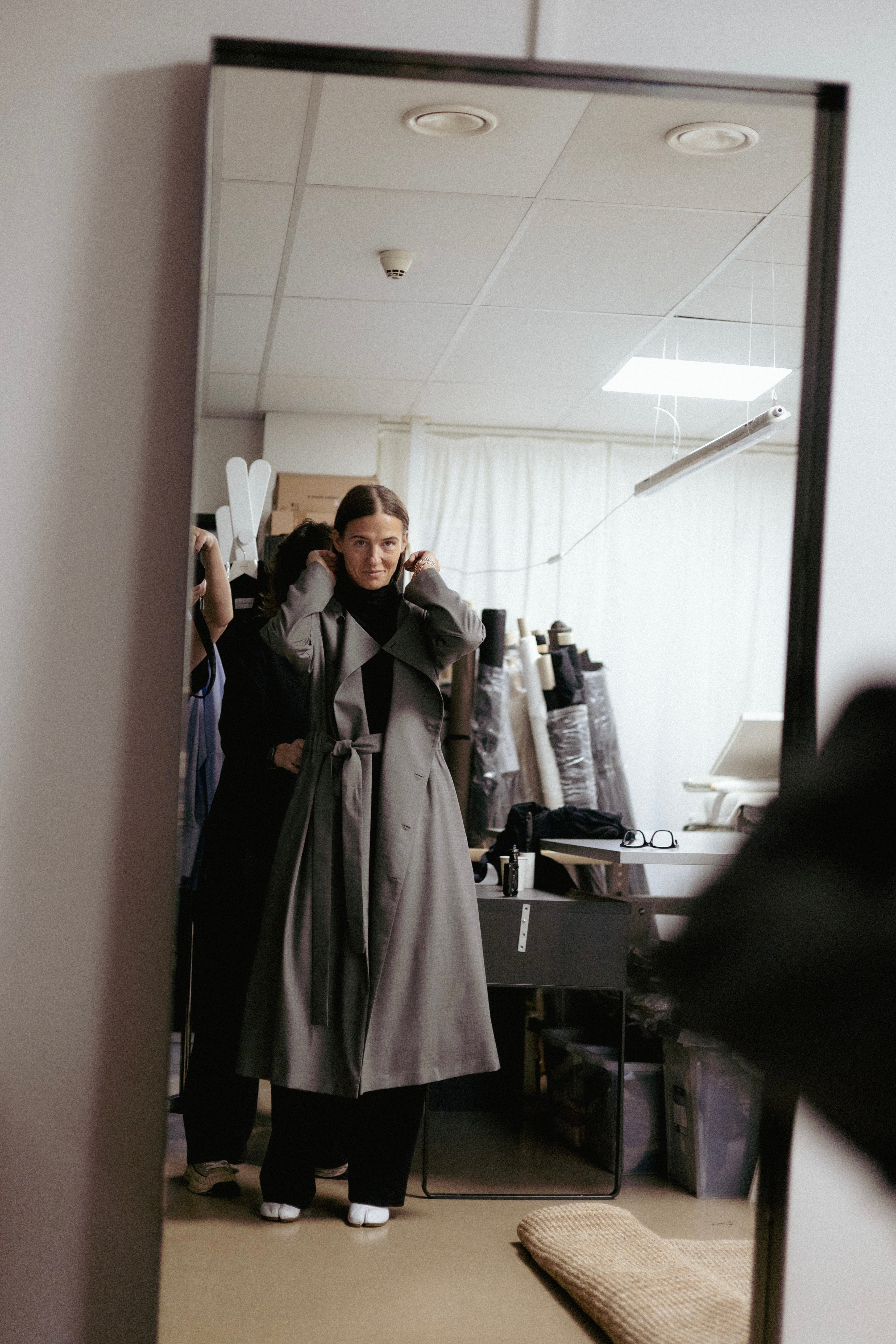
A significant part of our collection is made in our own studio. This is where we have the most control — over fit, over finish, over the small details that don't show up in product descriptions but that you feel when you wear something well-made.
Studio production also means small runs by necessity. We don't make more than we need. That keeps our inventory considered and our quality consistent.
Small Productions, Still in Estonia
For pieces that require different equipment or larger runs, we work with small, local production partners — also based in Estonia. These are not anonymous factories. They are small operations, often specialists in a particular type of garment or technique, and the relationship is close.
This model — studio plus trusted local partners — gives us flexibility without sacrificing oversight. Every piece, wherever it's made, meets the same standard.
The Fabrics: From Europe, Often Italy
We're transparent about where our fabrics come from: across Europe, with a significant portion sourced from Italy.
Italian textile mills have spent generations refining fine wovens, lightweight linens, fluid jerseys, and structured wools. When we choose an Italian fabric, we're choosing into that tradition — the result of decades of knowledge about how fibres behave, how colour holds, how a cloth moves on the body.
Sourcing from Europe also keeps our supply chain relatively short and our quality control high. We work with suppliers whose standards we trust, and we choose fabrics that are built to last — because a garment is only as good as what it's made from.
Slow by Design
Small-batch production in Estonia, fabrics chosen for longevity from European mills — this is a slower way to make clothes. It's also a more honest one.
We're not trying to compete on volume or speed. We're trying to make things that are worth keeping. Garments that fit well, hold their shape, and don't ask to be replaced next season.
That's the standard we hold ourselves to, piece by piece, in our studio and beyond.
Explore the current collection — made in Estonia, designed to last.
Read more about our approach to slow fashion in Slow Fashion as an Investment.

Leave a comment
This site is protected by hCaptcha and the hCaptcha Privacy Policy and Terms of Service apply.